
REVIEW · TROODOS MOUNTAINS & VILLAGES
Full-Day Tour UNESCO Churches and Kalopanayiotis in Cyprus
Six UNESCO churches in one mountain day. This full-day tour strings together some of Cyprus’s most famous Byzantine-era sites, then adds the feel of the Troodos foothills where village life slows down. I like that you get UNESCO Byzantine wall paintings in real places, not just photos, and you also get the contrast of Solea Valley and other mountain stops that feel worlds away from the coast.
The main thing to plan for is that lunch is not included and there is no professional guide listed, so you will want snacks and you should expect most storytelling to come from your driver. If you want a dedicated guide license and uninterrupted commentary, this may not be the best fit.
In This Review
- Key things I’d circle before you book
- From Larnaca to Kalopanayiotis Country in One Long Day
- Panagia Asinou Church: 12th to 17th-century painting in one UNESCO stop
- Galata Village and Panayia Podhithou: UNESCO-listed, 45 minutes to slow down
- Saint Nicholas of the Roof in Solea Valley: the monastery church covered in paintings
- Monastery of Saint John Lampadistes: built in 1731, with a 12th-century tomb story
- Panagia tou Moutoulla: a tiny 13th-century chapel with early example importance
- Church of Archangelos Michael in Pedoulas: built and decorated in 1474
- The Price, $240.32 per person, and whether it’s a good deal
- What the day feels like, timing, and how to make it work
- Guides and service: why past days have rated it so high
- Who should book this UNESCO churches day tour
- Should you book this UNESCO churches and Kalopanayiotis day tour?
- FAQ
- How long is the full-day UNESCO churches and Kalopanayiotis tour?
- Do you include pickup and drop-off?
- Is the tour private, and what language is it in?
- Are church admission tickets included?
- Is lunch included?
- Is a professional tour guide included?
- What is the cancellation and weather policy?
Key things I’d circle before you book
- Six UNESCO church stops in one long, efficient day, with each stop timed about 45 minutes
- Driver-led context from past guides like Fytos, Maria, and Chyso, plus calls ahead to help keep churches accessible
- Wall-painting focus across centuries, especially 11th to 17th-century art
- A tight, private group setup where only your group rides, with an air-conditioned vehicle
- No lunch included, so pack a plan for water and snacks
- Good-weather dependent timing, with the option to reschedule if conditions are poor
Further up into the Troodos, compared

From Larnaca to Kalopanayiotis Country in One Long Day
This is built as a full-day route, starting at 9:00 am and running about 8 to 9 hours. You are based in Larnaca, but the real action is in the interior, where villages and churches sit in valleys and on slopes. That’s the sweet spot of this trip: you trade beach time for slow, stone-and-paint time.
The tour is private, meaning only your group participates. In practical terms, this usually makes timing smoother. You can move at your pace through each church without the shuffle of a big bus crowd. It also helps for photo stops, bathroom breaks, and managing stairs or tight entrances, especially in older buildings.
You will also have pickup and drop-off, with the transport handled in an air-conditioned vehicle. That matters on a long day in Cyprus, because even when the churches are cool and shaded, the roads are not always.
Panagia Asinou Church: 12th to 17th-century painting in one UNESCO stop
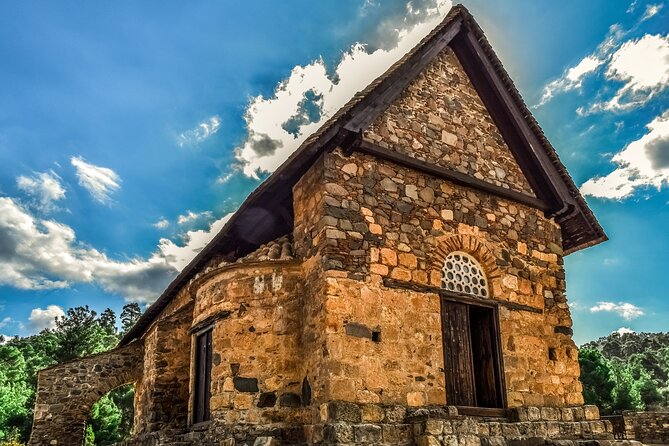
Stop 1 is Panagia Asinou Church, a UNESCO World Heritage Site known for some of the island’s finest Byzantine wall paintings. The art spans a wide date range, from the 12th to the 17th centuries, which is a big deal. You are not only seeing one “moment in time,” you are seeing a church that kept being valued and updated.
Plan for a 45-minute visit. That sounds short until you remember what you are looking at: wall paintings take time to actually read. If you rush, you’ll see the overall colors and shapes, but you will miss the storytelling in the details.
A practical tip: arrive ready to look upward. In churches like this, the most important scenes are usually on the walls and ceilings, and your eyes need a minute to adjust to interior light.
Galata Village and Panayia Podhithou: UNESCO-listed, 45 minutes to slow down
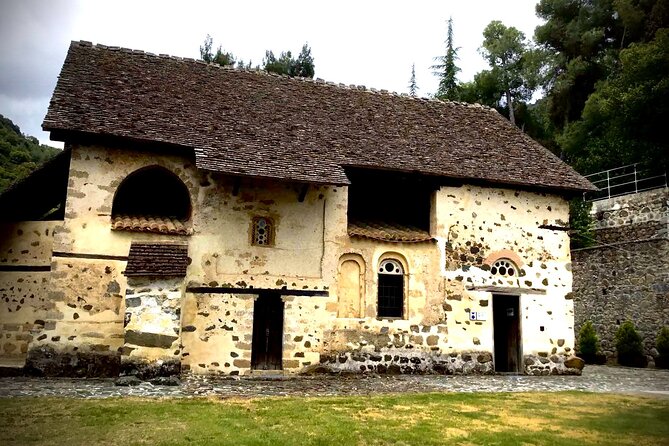
Stop 2 heads to the village of Galata for the Church of Panayia (The Virgin) Podhithou. This one is also UNESCO-listed, and you’re spending another 45 minutes here. The payoff is that you get variety without adding travel chaos. Different village, different church feel, same overall focus on Byzantine sacred art.
What I like about this kind of second stop is how it changes your eye. After Panagia Asinou, your brain starts recognizing patterns: icon styles, how figures are framed, and how narrative scenes are arranged. Then Podhithou gives you a new layout and new artistic choices, so your attention stays fresh.
One consideration: since admission is listed as free, it can still feel like a “quick check,” unless you intentionally take your time. I suggest you pick one thing to focus on during this stop, like the style of faces, the backgrounds, or the way scenes are grouped.
Saint Nicholas of the Roof in Solea Valley: the monastery church covered in paintings
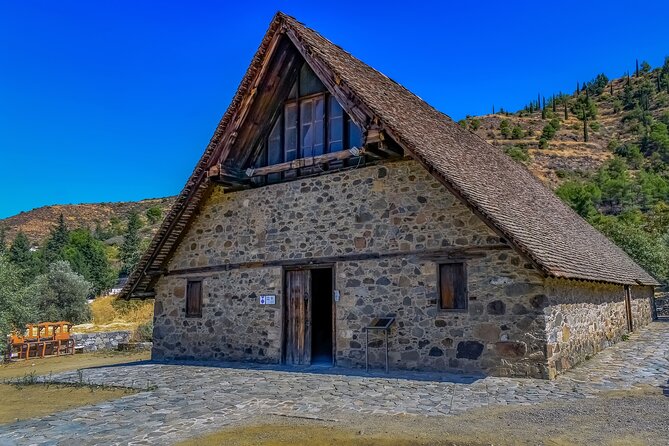
Stop 3 is the Church of Saint Nicholas of the Roof in the Solea Valley. This is one of the most distinctive stops on the route because it is described as a UNESCO World Heritage Site and, crucially, it is the only surviving monastery church of its kind on the island. It is also covered entirely in wall paintings from the 11th to the 17th centuries.
That “entirely covered” detail is not small. It means you’re looking at a continuous painted world, rather than a few highlight panels. In a 45-minute window, this is the stop where you need to slow down more than you think. Pick a few sections and let your attention stay there. If you try to see everything, you’ll end up seeing nothing clearly.
Solea Valley also gives you a sense of place. You’re not just visiting a building, you’re getting the mountain valley setting that helped these monasteries and churches matter to local communities. From a value perspective, that helps justify the long day because it includes both art and setting.
- Private Diving at Zenobia Wreck in Larnaka★ 5.0 · 369 reviews
- Cape Greco Blue Lagoon and Ayia Napa Tour★ 5.0 · 249 reviews
- Troodos Mountains Villages: All Inclusive Food & Wine Day Tour★ 5.0 · 234 reviews
- Troodos Mountains Vino Venture: All Inclusive Full Day Wine Tour★ 5.0 · 101 reviews
- FAB Private Customized Tours Cyprus from Larnaca city★ 5.0 · 90 reviews
Monastery of Saint John Lampadistes: built in 1731, with a 12th-century tomb story
Stop 4 is Monastery of Saint John Lampadistes and its church, Agios Ioannis Lampadistis, built in 1731. The reason it stands out is what the stop includes underneath the architecture. The saint’s tomb dates to the 12th century, and you are told that the saint’s skull lies in a niche.
That combination of construction date and earlier relic tradition makes this a more emotionally charged stop than the painting-focused ones. Even if you’re not religious, it helps you understand why people kept returning. The building changes, but the meaning stays anchored.
Again, it’s around 45 minutes, so give this stop a slightly different approach. Don’t just look for paintings or murals. Look for how people move through the space, what is emphasized, and where the tomb and niche information points your attention.
Panagia tou Moutoulla: a tiny 13th-century chapel with early example importance
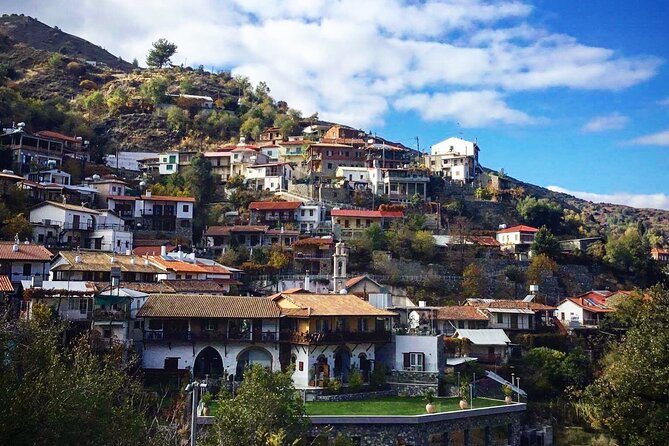
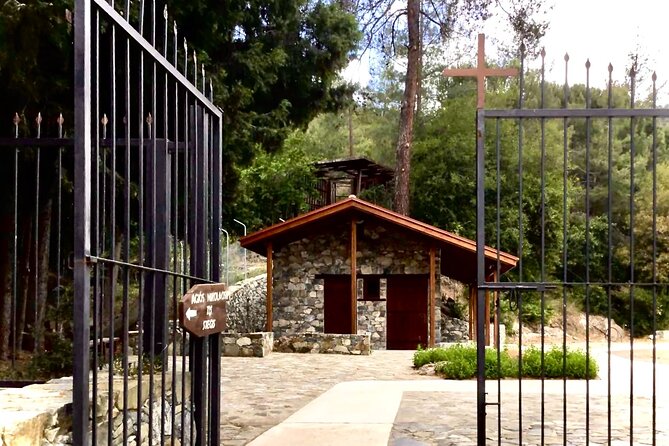
Stop 5 is Panagia tou Moutoulla, a tiny 13th-century chapel in the mountainous region of Moutoulla. It is described as one of the earliest examples of its type, and it is UNESCO-listed.
Small chapel stops are a smart way to break up a day like this. After larger churches, you start noticing craftsmanship in a more intimate way. You also often feel less rushed, because the building’s size naturally limits how much ground you can cover.
One practical reality: “tiny” also means “watch your head and your footing.” If you’re the type who moves carefully indoors, you’ll appreciate the slower pace. If you tend to barrel through, this is the stop where you’ll want to slow down so you don’t miss the details that make it important.
Church of Archangelos Michael in Pedoulas: built and decorated in 1474
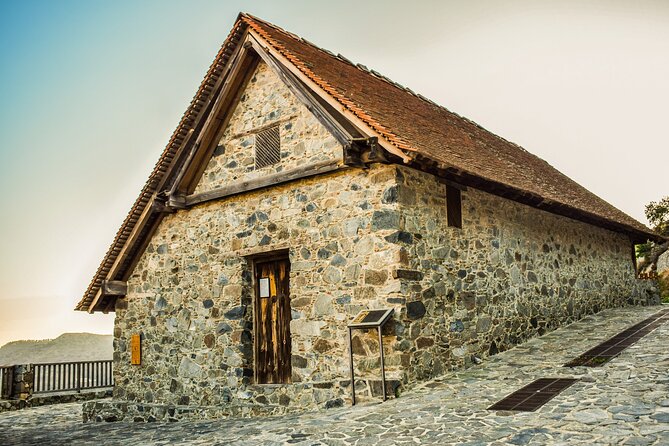
Stop 6 brings you to Pedoulas, for the Church of Archangelos Michael. This church is described as a small church built and decorated in 1474 by a local painter named Minas, who came from the area of Marathasa. It is also on the UNESCO World Heritage Sites list.
This stop has a different kind of value: you get a clearer link to the human artist behind the work. Knowing the name Minas and the origin from Marathasa gives context that most fast stops miss. It turns the church from a generic “icon wall” into a specific artistic moment.
In your 45-minute visit, you’ll likely get a better viewing experience if you do what the best museum-goers do: choose a single section to examine closely. Architectural details, painted figure composition, and color use tend to hold up best when you’re not scanning the whole room every five seconds.
The Price, $240.32 per person, and whether it’s a good deal
At $240.32 per person, this tour isn’t the cheapest way to “see a few churches.” But for Cyprus, it can be good value if you care about UNESCO sites and want a smooth day without planning stress.
Here’s what you do get included:
- Air-conditioned vehicle
- Private transportation
- Pickup and Drop-off
And you also benefit from a route that hits multiple UNESCO churches in a single day, which saves you from coordinating separate drives and ticket timing.
What you don’t get included:
- Lunch
- A professional tour guide
That last point is why I frame the value question like this: if you’re happy with driver-led explanations, this price can make sense because you’re paying for transport, timing, and access to multiple sites. If you want a dedicated guide doing deep narration at each stop, you may feel something is missing.
Also, this tour is booked fairly ahead of time, with an average booking window of 34 days. If your dates are tight, early booking helps you secure the schedule you want.
What the day feels like, timing, and how to make it work
Think of the day as six “art appointments.” Each stop is about 45 minutes, which is long enough to look carefully and feel the place, but not long enough to treat it like a half-day museum.
That means your comfort choices matter:
- Wear shoes you trust on stone floors and uneven entryways.
- Bring water, since lunch is not included.
- If you like to snack during stops, plan a light routine before you get absorbed.
It also helps to remember the tour is service animal allowed and most travelers can participate. Tight or older church interiors can still be a factor for anyone with mobility issues, so if that’s your situation, it’s worth asking what to expect at each stop before you go.
Guides and service: why past days have rated it so high
The standout pattern in feedback is not just that the churches are beautiful. It’s the way the day is run.
In past experiences, guides and drivers like Fytos and Maria brought a very conversational, personal tone, and Maria in particular made a point of calling ahead to make sure each church was open for your visit. That little detail can save your day. When you are spending hours driving between UNESCO stops, an unexpected closure can break the whole rhythm.
Another name you may see connected to the tour is Chyso, with comments about efficient explanations and context for the churches and the surrounding villages. Even when the core itinerary stays the same, that human part is what turns “we saw churches” into “we understood what we saw.”
Who should book this UNESCO churches day tour
This is a strong match if you:
- Want UNESCO churches with Byzantine wall paintings and don’t want to stitch together separate car trips
- Enjoy a structured route with short, focused time at each site
- Like mountain villages and want the interior of Cyprus, not just the coast
- Prefer a private group setup and pickup convenience
It may be less ideal if you:
- Need lunch provided or want a built-in meal break
- Are looking for a clearly labeled professional guide experience at every stop
- Prefer long, slow sightseeing with no scheduled 45-minute limits
Should you book this UNESCO churches and Kalopanayiotis day tour?
If you’re the type who gets satisfaction from walking into quiet churches and spending your attention on painted walls, I think you’ll enjoy this. The route stacks six UNESCO sites with a clear focus on Byzantine art across multiple centuries, and the mountain setting adds a totally different Cyprus feel than you get from beach days.
Just go in with the right expectations. Plan for snacks and water, because lunch is not included. And if what you really want is a full-time, professional guide narration, you should check that expectation directly before booking.
If you want a practical, efficient way to see serious UNESCO churches from Larnaca, this one is easy to recommend.
FAQ
How long is the full-day UNESCO churches and Kalopanayiotis tour?
The tour lasts about 8 to 9 hours.
Do you include pickup and drop-off?
Yes. Pickup is offered, and the tour includes pickup and drop-off. If your pickup location is not listed, you need to provide your exact address details.
Is the tour private, and what language is it in?
Yes, it is private, with only your group participating. It is offered in English.
Are church admission tickets included?
The tour information lists admission ticket free for each church stop.
Is lunch included?
No. Lunch and other meals are not included.
Is a professional tour guide included?
No professional tour guide is listed as included.
What is the cancellation and weather policy?
You can cancel for a full refund up to 24 hours in advance. The experience requires good weather, and if it is canceled due to poor weather, you will be offered a different date or a full refund.
Churches, Monasteries and Frescoes
- Private Full-Day Tour to Cyprus Monasteries
★ 5.0 · 7 reviews
Deeper Into the Troodos
- Troodos Mountains Villages: All Inclusive Food & Wine Day Tour
★ 5.0 · 234 reviews - Troodos Mountains Vino Venture: All Inclusive Full Day Wine Tour
★ 5.0 · 101 reviews - Troodos Mountains Halloumi Making: All Inclusive Workshop & Tour
★ 5.0 · 66 reviews - Troodos Mountains Grape Escape: All Inclusive Food & Wine Tour
★ 5.0 · 57 reviews - Meet the locals of Troodos mountains
★ 4.5 · 41 reviews
Newest Cyprus write-ups from our reviewers



Troodos Mountains & Villages, compared.
 ★ 4.5100% Cyprus – Tour to Troodos mountains and villages (From Paphos)From $661,562 reviews
 ★ 5.0Troodos Mountains Villages: All Inclusive Food & Wine Day TourFrom $142610 reviews
 ★ 4.5Troodos Peaks & Mountain Flavors Day Tour from PaphosFrom $66316 reviews
 ★ 5.0Troodos Mountains Vino Venture: All Inclusive Full Day Wine TourFrom $142299 reviews
★ 5.0Troodos Mountains Villages: All Inclusive Food & Wine Day TourFrom $142234 reviews
★ 5.0Troodos Mountains Vino Venture: All Inclusive Full Day Wine TourFrom $142299 reviews
★ 5.0Troodos Mountains Villages: All Inclusive Food & Wine Day TourFrom $142234 reviews
 ★ 4.5Troodos Jeep Safari from Protaras,Ayia napa & LarnacaFrom $96185 reviews
★ 5.0Troodos Mountains Villages: All Inclusive Food & Wine Day TourFrom $142159 reviews
★ 5.0Troodos Mountains Villages: All Inclusive Food & Wine Day TourFrom $142135 reviews
★ 4.5Troodos Jeep Safari from Protaras,Ayia napa & LarnacaFrom $96185 reviews
★ 5.0Troodos Mountains Villages: All Inclusive Food & Wine Day TourFrom $142159 reviews
★ 5.0Troodos Mountains Villages: All Inclusive Food & Wine Day TourFrom $142135 reviews
Browse the lists this tour appears in